
Choose the care you want to protect

Health Insurance for Your Dog

Build a dog policy around medical needs, service exclusions and sustainable costs, then check the actual offer.

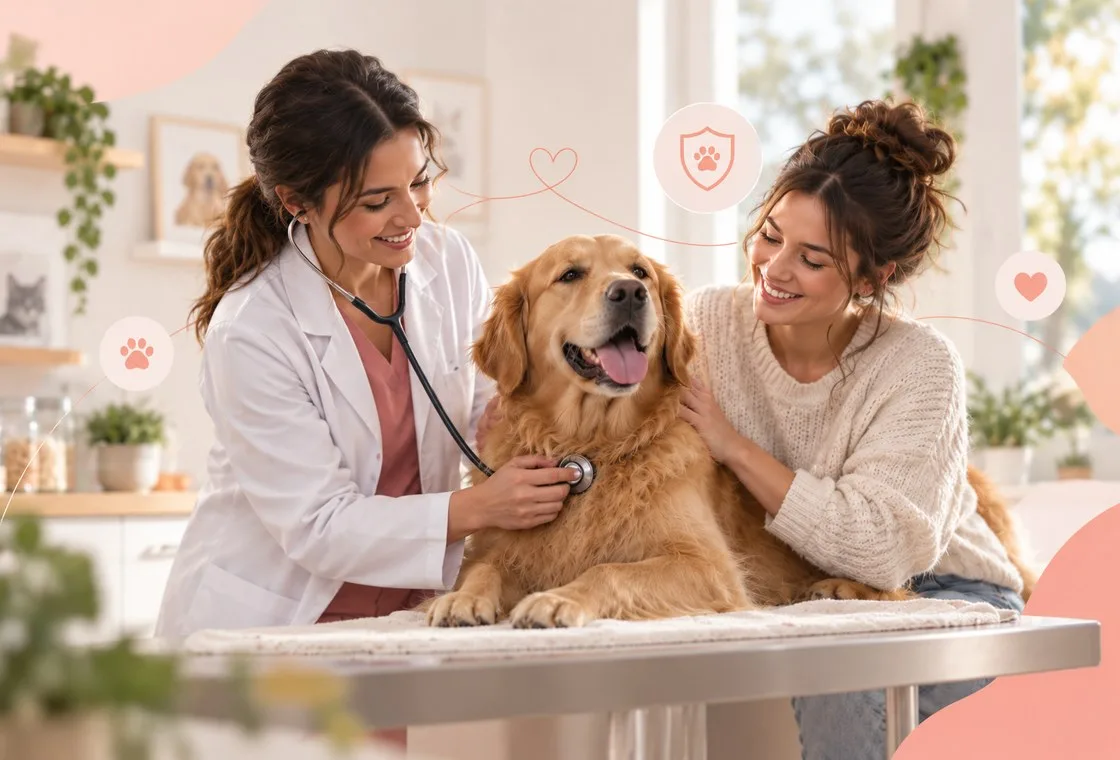
Veterinarian examining a golden-colored dog beside its owner
✓ Policy-first ✓ Independent ✓ Useful checks
Direct answer
Pet dog health insurance helps pay eligible veterinary expenses under a defined contract. For broad medical protection, examine accident-and-illness coverage and then check which examinations, prescriptions, dental care, rehabilitation and preventive services require extra benefits. Your dog’s history and the policy’s exclusions determine what protection remains.
What to know

Define the job of the policy

Start with the care you would struggle to fund, rather than collecting every optional benefit. You may want protection against a major unexpected treatment, support for an eligible condition requiring repeat care, or help budgeting preventive services. These priorities overlap, but they do not create the same coverage requirements.

Accident-only insurance has a narrower purpose than accident-and-illness insurance. A wellness arrangement addresses listed routine services. Read the product category first so a low price does not conceal a different kind of promise. The NAIC’s pet-insurance overview provides the broad categories; the issued contract supplies the details.

What to know

Review the whole treatment plan, not one service

Part of a dog’s care Policy question Planning consequence
Consultation and diagnosis Are sick-visit fees and diagnostic work both eligible? A listed test benefit does not answer the separate exam-fee question.
Medication at home Are prescribed medicines for the eligible condition included, with any restrictions? Repeated refills can matter as much as the initial procedure.
Referral or specialist care Does the contract permit the clinician and treatment setting? Check access before assuming every referral follows identical rules.
Rehabilitation Is the recommended therapy included or optional, and who may provide it? A surgical benefit alone is insufficient evidence about later rehabilitation.
Planned preventive care Is the service named in a preventive benefit? Vaccines and routine screening need their own coverage check.

Use this as a set of questions for your proposed plan. It is not a recommendation for treatment or a list of services every dog needs. The veterinarian determines the care plan; the insurer explains the contractual treatment of its components.

Pet profile

Use the dog’s history without predicting its future

Breed and inherited conditions

Ask about hereditary, congenital and orthopedic wording. A breed’s susceptibility is a reason to investigate terms, not proof your dog will become ill or that an insurer will pay.

Earlier signs and care

Collect available records from prior owners, adoption organizations and clinics. An ownership change does not establish a new medical starting point for the policy.

If the dog has an existing diagnosis, ask how broadly the exclusion reaches. If it has unexplained earlier symptoms, provide them accurately. If it has no known history, describe the actual information available rather than asserting that no condition ever existed.

For a working or sporting dog, read any applicable use or activity restrictions and answer questions about those activities truthfully. Do not infer a restriction simply from the dog’s breed, and do not assume an ordinary household-pet policy addresses every special use.

What to know

An official product example shows why add-ons matter

Its add-on guide separately describes visit-fee and physical-therapy options, among others. This illustrates why the phrase “health insurance” alone cannot tell you whether all parts of a veterinary plan are covered.

Before adding benefits, mark each as essential, useful or unnecessary for the protection you are seeking. Ask how its limit interacts with the medical policy, whether the deductible applies and whether the option is offered for your dog and location. Keep the actual selected endorsements with the policy.

A brochure example may omit the fee or service most relevant to you. Instead of projecting its reimbursement onto your dog, ask the insurer to show the calculation rules in the contract and identify any charge that would be excluded.

Cost & value

Keep protection affordable after the first payment

The recurring premium buys the contractual protection. The deductible, your share of eligible costs, excluded services and costs above limits can still require money from you. A monthly premium that consumes all available veterinary savings may leave no room to use the policy when care is needed.

Compare at least two configurations of a finalist: one with more retained cost and one with less, keeping the coverage scope visible. Ask what changes at renewal and whether reducing benefits now could make restoring them later subject to approval. Do not assume the initial price is a lifelong price.

Use a reserve for immediate clinic payment and costs the plan leaves with you. Reimbursement timing and direct-payment arrangements must be confirmed; insurance enrollment alone does not guarantee that a clinic can wait for payment.

Quotes

Keep veterinary protection separate from other dog expenses

A medical policy is not a general promise to pay every cost of owning a dog. Read the exclusions for routine food, equipment, grooming, training, breeding-related care or other expenses relevant to your household. An express benefit may change the answer, but the word “health” is not enough.

Liability for injury caused to another person is also a separate insurance question. Maine’s consumer guide points owners toward homeowners or renters coverage for possible dog-related liability, subject to its own terms. Do not assume a pet medical policy replaces that review.

Once you choose a plan, save a one-page note of the benefits selected, important exclusions and claim instructions. Revisit it when your dog’s needs or policy change. The point is to know which care you have protected and which expenses you have deliberately kept responsibility for.

Next step

Compare Current Pet Insurance Rates

Check current options for your pet and location, then compare the policy details, exclusions, costs, and eligibility before choosing.

Compare the policy before you choose Check the actual offer, exclusions and out-of-pocket terms.
See Rate Options